Table of Contents
Choosing a mortgage term is one of the biggest financial decisions you’ll make as a homebuyer — and it comes down to a simple trade-off: a lower monthly payment now, or thousands of dollars saved in interest over time.
A 15-year mortgage and a 30-year mortgage can finance the exact same home, but they lead to very different financial outcomes. Here’s how to figure out which one actually saves you more money.
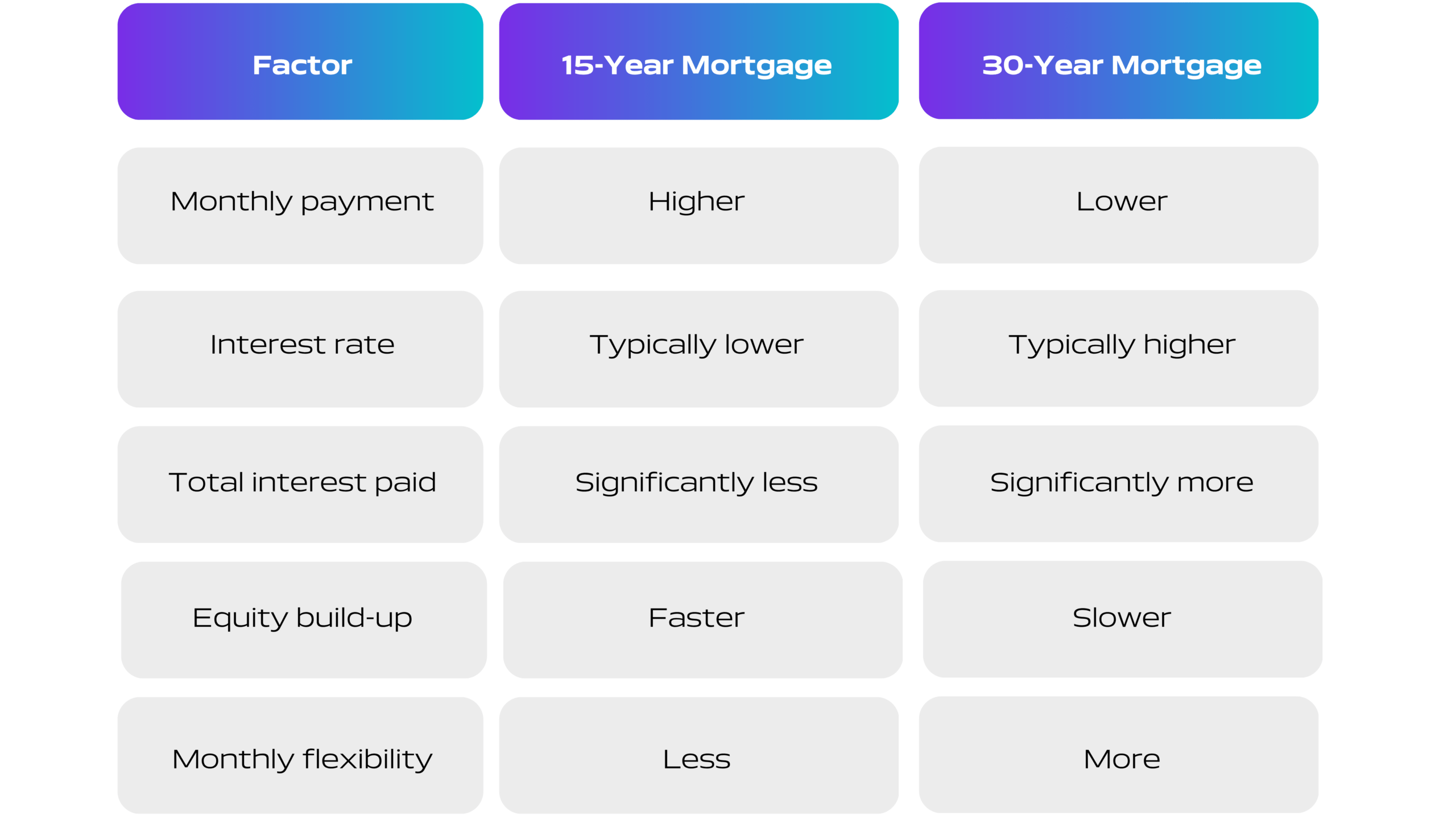
How a 15-Year and 30-Year Mortgage Compare
A 15-year mortgage almost always saves you more money overall because you pay significantly less interest and typically qualify for a lower interest rate. A 30-year mortgage costs more over time but comes with a lower, more manageable monthly payment.
The right choice depends less on which loan is “better” and more on what your budget can realistically support each month.
Monthly Payment Example
Here’s what that rate difference actually looks like in dollars, using a $350,000 loan amount:
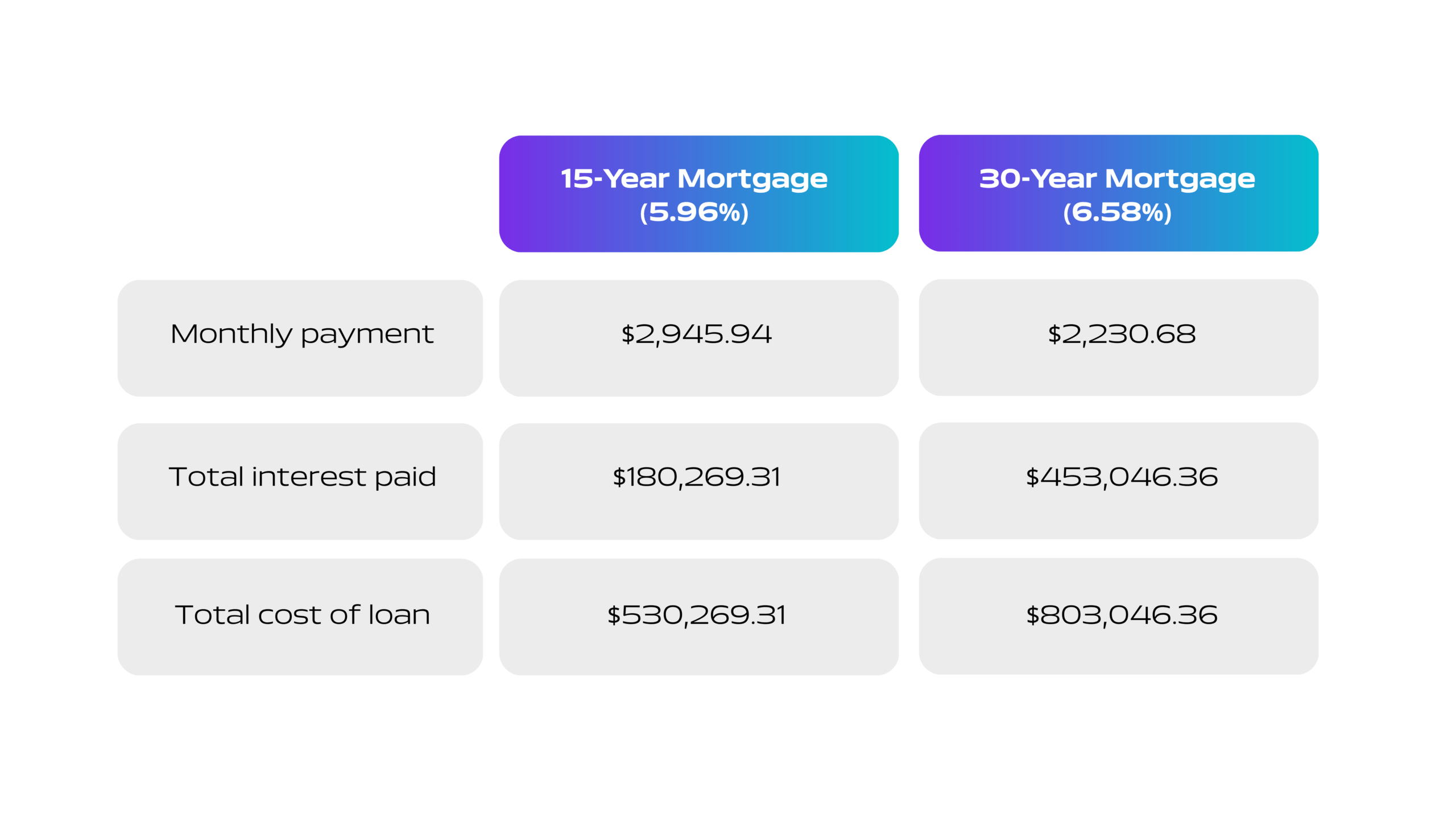
The 15-year loan costs about $715 more per month — but it saves roughly $272,777 in interest over the life of the loan. That’s the core trade-off: cash flow today versus long-term savings.
Figures are estimates based on principal and interest only; they don’t include property taxes, homeowners insurance, or PMI, which will affect your actual monthly payment.
Why a 15-Year Mortgage Can Save You More
- Lower interest rate. Shorter terms typically come with better pricing from lenders.
- Less time paying interest. You’re paying down principal faster from day one, so less of the loan balance sits around accruing interest.
- Faster equity growth. You build home equity roughly twice as fast, which matters if you plan to sell, refinance, or borrow against your home down the road.
- Debt-free sooner. Many buyers use a 15-year term specifically to be mortgage-free before retirement.
Why a 30-Year Mortgage Might Still Make Sense
- Lower monthly payment. More breathing room in your monthly budget for other goals — retirement savings, an emergency fund, or simply comfort.
- More buying power. A lower required payment can help you qualify for a larger loan amount or a more expensive home.
- Flexibility. You can always pay extra toward principal on a 30-year loan when you have the cash, without being locked into a higher required payment every month.
- Opportunity cost. If you can consistently earn a higher return investing the difference than you’d save in mortgage interest, the math can favor the 30-year term.

Which Loan Term Is Right for You?
A 15-year mortgage tends to make sense if you:
- Can comfortably afford the higher monthly payment without straining your budget
- Want to be mortgage-free faster, especially if you’re planning ahead for retirement
- Have a stable, predictable income
A 30-year mortgage tends to make sense if you:
- Want lower monthly payments and more financial flexibility
- Are early in your career, with income likely to grow over time
- Would rather invest the payment difference elsewhere
- Don’t plan to stay in the home for the full loan term

A Middle Ground: Pay a 30-Year Loan Like a 15-Year Loan
If you’re torn between the two, there’s a hybrid approach: take out a 30-year mortgage for the lower required payment and flexibility, but voluntarily pay extra toward principal each month — as if it were a 15-year loan.
This strategy gives you the interest savings and faster equity growth of a shorter term, while keeping the lower required payment as a safety net for months when money is tight. The trade-off is that you won’t lock in the lower 15-year interest rate, so you won’t save quite as much as you would with an actual 15-year loan.
The Bottom Line
If your budget can absorb the higher monthly payment, a 15-year mortgage is the more cost-effective choice — you’ll pay off your home faster and save a significant amount in interest. If a lower monthly payment gives you more financial security and flexibility, a 30-year mortgage is a perfectly reasonable trade-off, especially if you plan to pay extra toward principal when you can.
There’s no universally “right” answer — only the term that fits your budget, your goals, and your timeline.
Not sure which mortgage term fits your situation? Talk to our team at Quick Mortgage Loans for a free consultation, and we’ll help you run the numbers based on your specific budget and goals.
FAQS
Yes. Many homeowners start with a 30-year mortgage for flexibility and refinance into a 15-year term once their income grows or they want to pay off their home faster. Keep in mind refinancing comes with its own closing costs, so it’s worth running the numbers before switching.
Generally, yes. Because the monthly payment is higher, lenders calculate your debt-to-income ratio based on that larger payment, which can make it harder to qualify for the same loan amount compared to a 30-year term.
Closing costs are similar between the two, since they’re based mostly on the loan amount and lender fees rather than the loan term. However, some lenders offer slightly lower rates or fee discounts on shorter-term loans.
This content is for informational purposes only and does not constitute financial or legal advice. Loan terms and requirements vary by lender.